
Operations Management
⚙️ Professional operations management support to organize workflows, improve business processes, and keep your day-to-day operations running smoothly.
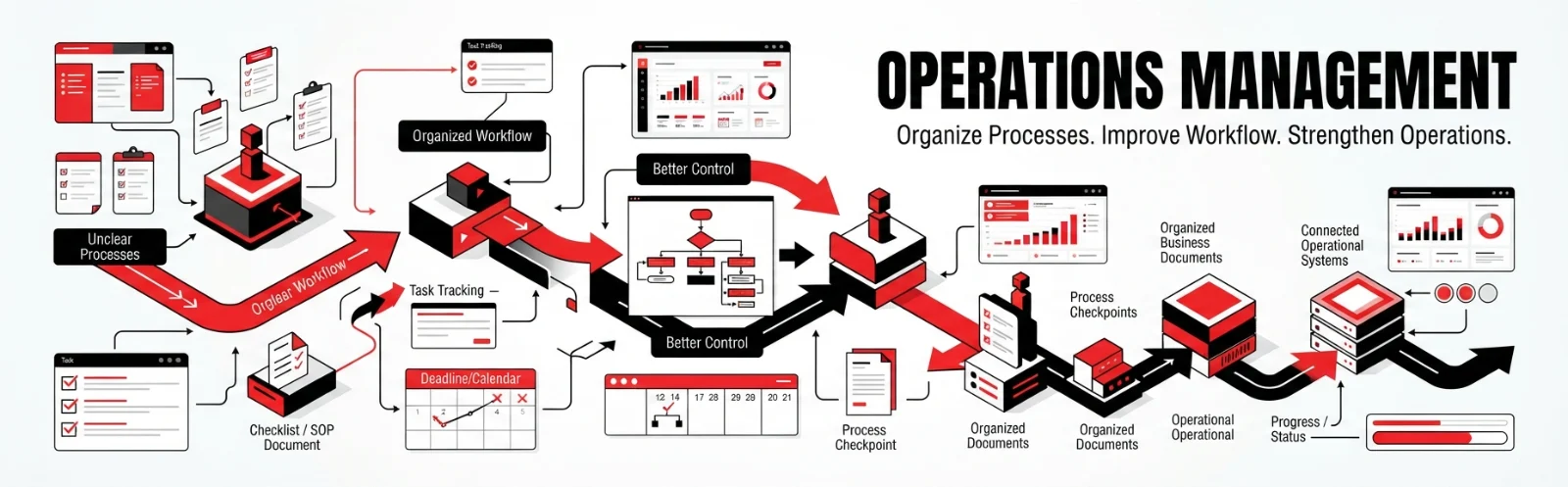
🧭 What Operations Management Covers
Operations management coordinates the workflows, tasks, processes, systems, and recurring activities that keep a business running efficiently. At A1 Infinity Nexus, we organize daily operations, improve processes, document procedures, coordinate tasks, and strengthen operational consistency.
🚧 Problems We Help You Solve
| Common Challenge | How We Address It |
|---|---|
| Unclear workflows | Create clearer task sequences, responsibilities, priorities, and workflow stages |
| Missed deadlines | Organize deadlines, recurring tasks, priorities, and operational tracking |
| Repeated manual work | Identify unnecessary steps and simplify recurring business processes |
| Inconsistent processes | Standardize workflows, procedures, documentation, and operational requirements |
| Poor task visibility | Improve ownership, progress tracking, task status, and operational visibility |
| Process bottlenecks | Identify delays, workflow gaps, dependencies, and operational friction |
| Too much follow-up | Strengthen coordination, accountability, communication, and task ownership |
| Undocumented processes | Create practical SOPs, checklists, templates, and process documentation |
🛠️ What We Can Manage for You
📋 Workflow Organization
Organize recurring business workflows into clear, practical processes with defined tasks, responsibilities, priorities, deadlines, dependencies, and workflow stages. This gives everyday work a more structured direction and makes important operational responsibilities easier to understand and manage consistently.
Review how work moves between people, departments, tools, and process stages to identify unclear handoffs, delayed information, duplicated activities, unnecessary communication, and recurring operational follow-ups. We then help create clearer movement between each stage so work can continue with less confusion.
Create structured workflows that make recurring responsibilities easier to understand, manage, monitor, delegate, coordinate, and complete consistently. Important business priorities, deadlines, dependencies, and outstanding activities remain easier to see throughout the workflow.
Maintain better visibility across active, pending, completed, delayed, and recurring operational work so important responsibilities can be identified and managed before they become larger problems. This creates a clearer picture of what is happening across your day-to-day operations.
Identify workflow gaps and process dependencies that may create confusion, unnecessary waiting time, repeated work, missed responsibilities, or delays between different stages of your business operations. We help organize these areas into more practical and manageable workflows.
Organize recurring tasks into logical sequences so team members can clearly understand what needs to happen first, what information is required, who is responsible, and what action comes next. This helps create a more consistent approach to routine operational work.
🔄 Process Improvement
Review existing business processes to identify unnecessary steps, duplicated work, bottlenecks, delays, unclear responsibilities, and other areas where everyday operations can become simpler and more consistent. Our focus is on practical improvements that fit the way your business already works.
Improve recurring processes by creating clearer sequences, responsibilities, checkpoints, instructions, and practical working methods that fit your existing business structure, tools, and requirements. This helps make important operational activities easier to repeat and manage.
Examine how tasks, information, people, and systems connect throughout your workflow to identify operational friction and opportunities to improve coordination without adding unnecessary complexity. We focus on removing avoidable obstacles while keeping useful processes intact.
Support continuous process improvement by reviewing recurring operational problems, identifying their causes, and applying practical changes that make important business activities easier to manage. Improvements can focus on workflow structure, task ownership, documentation, coordination, or execution.
Simplify processes that require excessive manual effort, repeated follow-up, unnecessary approvals, duplicated information, or frequent clarification. Clearer processes can help your team complete recurring work with less administrative friction and greater consistency.
Review process performance over time and identify areas where stronger organization, clearer documentation, improved coordination, or better task ownership could strengthen operational consistency. This creates opportunities for ongoing improvement rather than one-time process changes.
📑 SOP & Process Documentation
Create clear SOPs, process guides, checklists, templates, and instructions that explain important recurring business activities in a structured and easy-to-follow format. Each resource can be organized around the actual requirements and workflow of your business.
Document operational knowledge so important processes do not depend only on individual memory, scattered messages, informal explanations, or one specific person knowing how the work should be completed. This makes important business knowledge easier to preserve and share.
Break complex workflows into practical steps that clearly explain responsibilities, required information, tools, checkpoints, expected outcomes, and actions needed at each stage. Clear documentation helps make recurring work easier to understand, follow, and delegate.
Review existing documentation and update outdated, incomplete, unclear, duplicated, or inconsistent instructions so your operational documentation remains useful and aligned with current workflows. This helps prevent old information from creating unnecessary process confusion.
Build documentation that makes recurring work easier to repeat, delegate, train, maintain, review, and improve while giving team members clearer guidance for everyday responsibilities. Well-organized documentation can also reduce repeated questions and unnecessary explanations.
Create practical process references for recurring administrative, CRM, customer support, lead generation, e-commerce, real estate, research, data, and other business operations. Documentation can be structured around the specific processes your business relies on most.
🎯 Task & Operations Coordination
Coordinate recurring operational tasks by maintaining clear priorities, ownership, deadlines, dependencies, follow-ups, completion status, and workflow requirements across important business activities. This helps keep daily responsibilities organized and visible.
Help keep multiple operational activities moving together by coordinating information, handoffs, approvals, updates, and required actions between the people involved in each workflow. Clear coordination helps reduce unnecessary delays and repeated communication.
Monitor pending responsibilities and recurring tasks so important operational work does not become overlooked, unnecessarily delayed, forgotten, or repeatedly discussed without reaching completion. Outstanding activities remain visible until the required action is completed.
Maintain organized task visibility so business owners and teams can quickly understand what requires attention, what is currently in progress, what is waiting, and what has already been completed. This makes daily operational coordination easier to manage.
Coordinate recurring responsibilities across different workflow stages so completed work is transferred clearly and the next responsible person understands what needs to happen. This helps create smoother handoffs and reduces uncertainty between process stages.
Support operational continuity by keeping task information, responsibilities, deadlines, and follow-up requirements organized even when multiple projects or priorities are being handled simultaneously. This provides greater structure during busy operational periods.
✅ Quality & Process Checks
Review operational work against established requirements, processes, checklists, instructions, and quality standards to identify incomplete, inconsistent, inaccurate, or improperly completed work. This provides an additional layer of operational reliability.
Identify recurring errors, missing information, process deviations, and quality issues that may affect operational accuracy, customer experience, workflow consistency, or final business outcomes. Findings can then support practical process improvements.
Track repeated quality problems and help identify whether the underlying cause is unclear instructions, weak processes, missing documentation, insufficient coordination, or inconsistent task execution. Understanding the cause helps prevent the same issues from continuing.
Support practical quality checks at important workflow stages so potential issues can be identified earlier rather than being discovered after an entire process or project has been completed. Early checks can help reduce avoidable rework.
Review recurring operational activities for consistency and identify areas where clearer requirements, better documentation, stronger checkpoints, or improved task ownership could help maintain expected quality across repeated business activities.
Document recurring quality findings and use them to support improvements to workflows, SOPs, checklists, and operational procedures. This turns quality reviews into useful information for ongoing process improvement.
📊 Operational Tracking
Track important operational activities including tasks, deadlines, workflow stages, recurring responsibilities, pending work, and completion progress. Structured tracking provides clearer visibility into the current state of important business operations.
Maintain organized operational records so business owners and managers can quickly understand current workload, outstanding work, completed activities, recurring responsibilities, and areas requiring attention. This reduces the need for manual status checking.
Review tracking information to identify recurring delays, unfinished tasks, workflow gaps, and areas that may require stronger operational structure. Patterns in operational activity can help highlight where processes need additional attention.
Build practical tracking systems that provide useful visibility without creating unnecessary reporting or administrative work. The goal is to make operational information easier to manage while keeping the tracking process practical for everyday use.
Monitor recurring operational activities and deadlines so important responsibilities remain visible throughout the workflow. This helps teams maintain better awareness of upcoming work and outstanding requirements.
Use operational tracking information to support workflow reviews, identify recurring operational issues, and determine where better organization, coordination, documentation, or process improvement may be required.
💎 What Your Business Gains
Better organization across workflows, responsibilities, recurring tasks, deadlines, and operational priorities, giving your team a clearer structure for managing everyday business activities.
Stronger consistency through standardized processes, SOPs, checklists, quality checks, and clearer operational requirements that make recurring work easier to repeat correctly.
Greater visibility into active work, pending responsibilities, deadlines, workflow progress, recurring activities, and operational requirements without relying on scattered information.
Less operational confusion through clearer ownership, improved handoffs, organized processes, better documentation, and reduced unnecessary follow-up across daily business activities.
Better scalability through practical workflows, documentation, tracking systems, and operational structures that can continue supporting your business as workload and responsibilities increase.
🔧 How We Handle Your Operations
1 Discover
We understand your existing workflows, recurring tasks, responsibilities, tools, priorities, and operational challenges so support is built around your actual business requirements.
2 Map
We organize your current processes to understand how tasks, information, people, tools, responsibilities, and workflow stages connect throughout your day-to-day operations.
3 Improve
We identify practical opportunities to simplify processes, reduce friction, improve coordination, strengthen task ownership, and create more consistent operational workflows.
4 Document
We create or improve SOPs, checklists, templates, process guides, and operational instructions where documentation can make recurring work easier to manage and repeat.
5 Execute
We support the practical day-to-day execution and coordination of improved operational processes while keeping important responsibilities, deadlines, and workflow requirements visible.
6 Review
We monitor recurring work, identify operational issues, review process performance, and support continuous improvements as your business requirements and workload evolve.
👥 Who Can Benefit?
Operations Management support can help small businesses, startups, growing companies, e-commerce businesses, real estate teams, service providers, remote teams, and busy founders who need stronger structure around their daily operations.
It is especially useful when your team is spending too much time organizing tasks, following up on responsibilities, fixing repeated process problems, managing scattered information, or trying to keep recurring work on track while also focusing on clients and growth.
💻 Tools We Work With
| Category | Platforms |
|---|---|
| Task Management | Trello, Asana, ClickUp, Monday.com, Notion |
| Communication | Slack, Microsoft Teams, Zoom, Google Meet |
| Documents | Google Workspace, Microsoft 365, Dropbox, OneDrive |
| CRM | HubSpot, Salesforce, Zoho CRM |
| Data & Tracking | Google Sheets, Excel, Airtable |
| E-commerce | Shopify, WooCommerce, Amazon, eBay |
| Automation | n8n, Zapier |
🎯 Built Around Your Business
Every business operates differently, so our operations management support is built around your actual workflows, tools, responsibilities, priorities, and business requirements rather than forcing your company into a generic operational structure.
We focus on keeping what already works, improving what creates friction, documenting what needs consistency, and creating practical systems that your team can realistically use throughout everyday business operations.
🔗 Related Resources
🚀 Ready to Strengthen Your Operations?
Stop losing valuable business time to scattered tasks, unclear workflows, repeated follow-ups, undocumented processes, and avoidable operational delays.
Send A1 Infinity Nexus your current operational requirements, workflow challenges, or recurring tasks. We’ll help organize the work, improve the processes, strengthen operational visibility, and create a more reliable structure for your business.
🚀 Get Started
Send Your Requirements → Organize Your Operations → Improve Your Processes → Strengthen Your Workflow → Keep Your Business Moving Forward
What is included
- Review your current workflow, goals, tools, and recurring challenges
- Create a clear task plan with priorities, ownership, and deadlines
- Complete and document the work with careful quality checks
- Provide proactive progress updates and flag issues before they grow
- Build reusable templates, checklists, and standard operating procedures
- Track results and continuously improve the process
Tools & platforms
Google Workspace, Microsoft Office, Slack, Zoom, Notion, Trello, Asana
Expected outcome
More time, fewer missed details, clear priorities, and dependable day-to-day execution.
Who this is for
Hourly & Project-Based Services
We work on both hourly and project-based engagements.