
What Is Lead Generation? A Practical Guide for Businesses
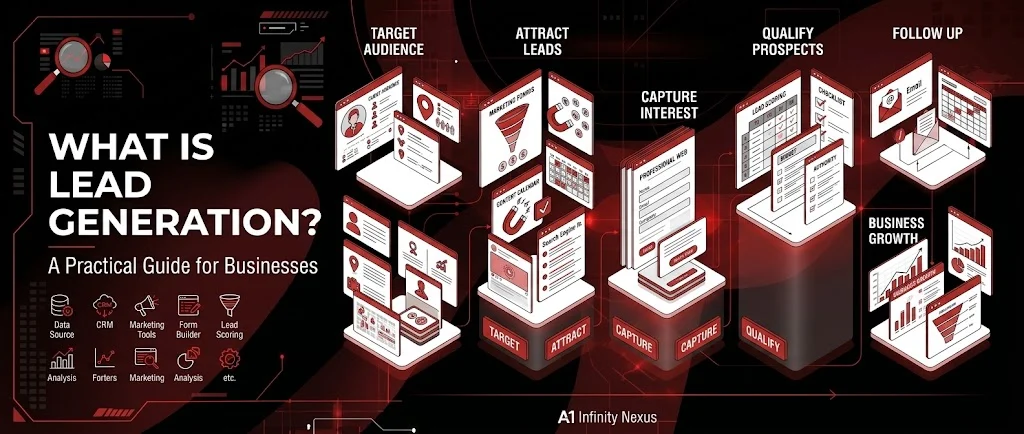
What Is Lead Generation? A Practical Guide for Businesses
Lead generation is the process of attracting potential customers, identifying people or organizations that may need a business's products or services, and creating opportunities for meaningful conversations. It helps businesses connect with relevant audiences, understand their requirements, and guide suitable prospects toward the next step.
However, lead generation is not simply about collecting as many names, email addresses, or phone numbers as possible. Effective lead generation focuses on attracting the right audience, capturing relevant information, qualifying potential customers, and maintaining a consistent follow-up process.
For businesses, understanding what lead generation is and how it works can help establish a more organized approach to business development. A practical lead generation strategy should answer several important questions:
Who is the business trying to reach?
What problems or requirements does the target audience have?
Which channels can help attract relevant prospects?
How should potential customers express interest?
What information is needed to qualify a lead?
Who is responsible for the next action?
How will progress and outcomes be measured?
Understanding these elements makes lead generation a more structured and useful part of business operations.
What Is Lead Generation?
Lead generation is the process of identifying and attracting individuals or organizations that may be interested in a company's products, services, or solutions.
A lead can come from several sources, including website inquiries, search engines, referrals, professional networking, social media, industry events, email responses, business directories, and other relevant channels.
For example, a business providing digital marketing services may attract a potential customer through an educational article. That visitor may explore the company's services, submit an inquiry form, and become a lead for further communication.
The lead becomes more valuable when the business understands the person's requirements and can determine an appropriate next step.
Lead generation is not a numbers-only activity. Its purpose is to create relevant business opportunities and make the process of identifying potential customers more organized.
A lead may be unqualified, interested, or qualified depending on the available information and engagement. Businesses should establish clear definitions for these stages so that different team members can manage prospects consistently.
Why Is Lead Generation Important for Businesses?
Lead generation plays an important role in business development because it helps companies identify potential customers and create opportunities for future growth.
Without an organized process, businesses may struggle to identify suitable prospects, manage inquiries, maintain communication, and understand which marketing activities are producing useful results.
Some important benefits include:
1. Identifying Potential Customers
Lead generation helps businesses identify individuals and organizations that may have a genuine interest in their offerings.
2. Improving Audience Targeting
A defined target audience allows businesses to focus their research, messaging, and marketing activities on more relevant prospects.
3. Creating Business Opportunities
Consistent lead generation can help establish a pipeline of potential customers and future conversations.
4. Supporting Better Follow-Up
When lead information and next actions are recorded properly, businesses can manage communication more consistently.
5. Improving Business Development Decisions
Tracking lead sources, qualification outcomes, and engagement helps businesses evaluate their processes and make informed adjustments.
6. Supporting Long-Term Customer Relationships
Relevant communication and useful information can help businesses build trust with prospects over time.
The Five Stages of a Practical Lead Generation Process
A successful lead generation process involves more than attracting attention. It requires a structured approach that moves from audience identification to qualification and follow-up.

1. Attract the Right Audience
The first stage is reaching people or organizations that are relevant to the business.
Businesses can use several lead generation strategies, including:
Search engine optimization (SEO).
Educational website content and blogging.
Professional networking.
Social media marketing.
Business referrals and partnerships.
Industry events and networking opportunities.
Targeted business research.
Relevant and responsible outreach.
The appropriate channel depends on the target audience, business model, available resources, and the type of service or product being offered.
2. Capture Interest Clearly
Once potential customers discover a business, they need a clear way to express interest.
Common lead capture methods include:
Website contact forms.
Inquiry emails.
Consultation booking forms.
Downloadable resources.
Product or service inquiries.
Professional conversations.
Event registration forms.
Businesses should explain what happens after someone submits an inquiry and collect only the information necessary for the intended follow-up.
A clear and straightforward process can make it easier for interested prospects to take the next step.
3. Qualify the Lead
Lead qualification means evaluating whether a potential customer is a suitable match for the business.
Businesses can consider several factors:
Need: Does the prospect have a relevant problem or requirement?
Fit: Does the prospect match the company's service capabilities?
Authority: Who participates in the purchasing or decision-making process?
Timing: Is the prospect ready to take action?
Scope: Does the requested work fall within the business's capabilities?
Budget: Is the expected investment compatible with the available budget, where relevant?
Qualification helps businesses prioritize opportunities and avoid spending unnecessary time on unsuitable inquiries.
4. Nurture Potential Customers
Not every lead is ready to make a purchasing decision immediately.
Lead nurturing involves maintaining relevant communication with interested prospects who may need additional information or time before taking action.
Examples include:
Sharing relevant educational resources.
Answering questions about services.
Providing useful case studies.
Sending agreed follow-up information.
Arranging a future conversation.
Sharing relevant updates when appropriate.
Communication should remain relevant, respectful, and consistent with the prospect's preferences and applicable requirements.
Repeated messages without a useful purpose can damage trust instead of building it.
5. Follow Up and Manage the Next Action
Follow-up is an important part of the lead generation process.
Every active lead should have a clear next action, an assigned owner, and an appropriate record of previous communication.
Possible next actions include:
Requesting additional information.
Arranging a consultation.
Preparing a proposal.
Answering a service-related question.
Scheduling a future follow-up.
Closing the record with a clear reason.
Recording these activities in a CRM or agreed tracking system helps businesses maintain continuity and evaluate their lead management process.
How to Define an Ideal Customer Profile
An Ideal Customer Profile (ICP) describes the type of customer or organization that is best suited to a business's products or services.
A clearly defined ICP helps businesses improve lead generation by focusing research and marketing activities on more relevant opportunities.
An ideal customer profile may include:
Industry: Which industries or business sectors are relevant?
Company Size: What operating scale or organizational structure is suitable?
Location: Which geographical markets does the business serve?
Business Needs: What problems or requirements can the company address?
Decision-Makers: Which roles are involved in evaluating or approving services?
Technology and Processes: Which tools, platforms, or workflows are relevant?
Buying Situation: Is the organization actively looking for a solution or exploring future options?
An ICP should guide lead research and prioritization rather than automatically exclude every unusual inquiry.
Businesses should review and improve their customer profiles as they learn more about their actual customers and market opportunities.
How to Qualify Leads Without Creating Unnecessary Friction
Effective lead qualification should feel like a useful conversation rather than an interrogation.
Businesses should ask relevant questions, explain why information is needed, and avoid requesting unnecessary personal or sensitive details.
A practical lead qualification process includes the following activities:
Define Qualification Criteria: Establish what makes a prospect relevant, uncertain, unsuitable, or ready for the next step.
Use Consistent Information Fields: Record the lead source, organization, requirements, status, owner, and next action.
Separate Customer Fit From Timing: A prospect may be suitable but not ready to purchase immediately.
Record Clear Reasons: Instead of using vague labels, document why a lead is not suitable or requires further information.
Review Qualification Outcomes: Evaluate whether the information collected is helping the business make better decisions.
These practices make lead qualification more consistent and improve the usefulness of business records.
What Are the Different Types of Lead Generation?
Businesses use different lead generation methods depending on their target audience, industry, business model, and available resources.
Inbound Lead Generation
Inbound lead generation focuses on attracting potential customers through useful content, search visibility, educational resources, and other activities that encourage people to discover a business.
Examples include:
SEO-focused articles.
Website landing pages.
Educational guides.
Social media content.
Webinars.
Downloadable resources.
Inbound lead generation can help businesses connect with people who are already researching relevant products, services, or problems.
Outbound Lead Generation
Outbound lead generation involves identifying relevant potential customers and initiating appropriate communication.
Examples include:
Targeted business research.
Professional networking.
Relevant business introductions.
Permission-based email outreach.
Industry events.
Business development conversations.
Outbound activities should use accurate information, relevant messaging, and appropriate communication practices.
B2B Lead Generation
B2B lead generation focuses on identifying potential business customers rather than individual consumers.
It may involve researching companies, identifying relevant decision-makers, understanding organizational requirements, and developing opportunities for business-to-business relationships.
Common B2B lead generation activities include company research, professional networking, industry directories, referrals, targeted content, and relevant outreach.
B2C Lead Generation
B2C lead generation focuses on attracting individual consumers who may be interested in a company's products or services.
Common channels include search engines, social media, online advertising, landing pages, referrals, and promotional campaigns.
The approach depends on consumer needs, purchasing behavior, product type, and market conditions.
Lead Sources Businesses Can Evaluate
There is no single lead source that works equally well for every business.
The best lead generation channels depend on the audience, industry, offer, budget, and business objectives.
Some commonly evaluated sources include:
Search Engines: SEO and useful website content can attract people researching relevant services or solutions.
Business Directories: Relevant directories can help businesses identify organizations within a defined market.
Professional Networks: Platforms such as LinkedIn can support professional connections and business research.
Referrals: Existing customers, partners, and professional contacts may introduce relevant opportunities.
Social Media: Business profiles and educational content can help build visibility and encourage inquiries.
Email Marketing: Relevant, appropriately permissioned email communication can help businesses maintain relationships with interested prospects.
Industry Events: Conferences, trade shows, and networking activities can create opportunities for meaningful business conversations.
Partnerships: Relationships with complementary businesses may introduce potential customers with shared interests.
The important practice is to record the original source and evaluate the quality of the resulting inquiries rather than measuring success through volume alone.
What Is the Difference Between Lead Generation and Lead Management?
Lead generation and lead management are related, but they serve different purposes.
Lead generation focuses on attracting and identifying potential customers.
Lead management focuses on organizing, tracking, qualifying, and following up with those potential customers after they enter the business process.
For example, a company may generate leads through website inquiries and professional networking. Its lead management process then records those inquiries, assigns responsibilities, tracks communication, and documents outcomes.
Both activities are important for maintaining an organized business development process.
How Does CRM Support Lead Generation?
Customer Relationship Management (CRM) helps businesses organize information about potential and existing customers.
A CRM system can support lead generation by maintaining records of lead sources, contact information, qualification status, communication history, assigned responsibilities, and follow-up activities.
However, purchasing CRM software does not automatically create an effective lead generation process.
Businesses still need:
Clearly defined lead stages.
Consistent information fields.
Appropriate access and data-handling rules.
Assigned follow-up responsibilities.
Reliable record-keeping practices.
Regular performance reviews.
A well-organized CRM workflow can make it easier to understand where leads originate, what actions have been taken, and which opportunities require attention.
How to Measure Lead Generation Performance
Measuring lead generation performance helps businesses understand whether their activities are producing useful opportunities.
Instead of focusing exclusively on the number of leads collected, businesses should consider measures connected to their objectives.
Useful measures include:
Lead Source: Where did the inquiry or prospect originate?
Lead Quality: How closely does the prospect match the ideal customer profile?
Qualification Rate: What proportion of captured leads meet the defined qualification criteria?
Follow-Up Completion: Are assigned next actions being completed?
Response Time: How long does it take the business to respond to relevant inquiries?
Conversion Rate: What proportion of leads progress to a defined next stage?
Cost Per Lead: How much does the business spend to generate a lead, when campaign cost data is available?
Lead Outcomes: Which opportunities progress, remain active, or close without further action?
These measures should be interpreted in context. A higher lead volume does not automatically mean better business performance.
Common Lead Generation Mistakes Businesses Should Avoid
Even businesses with established marketing activities can experience problems when their lead generation processes are unclear.
Common mistakes include:
Targeting Everyone: Broad messaging can make it difficult for suitable prospects to recognize relevance.
Collecting Information Without a Plan: Contact details have limited operational value when nobody knows how to review or follow up on them.
Ignoring Qualification: Treating every inquiry as equally important can waste time and resources.
Using Irrelevant Outreach: Generic communication can reduce trust and damage business relationships.
Ignoring Communication Preferences: Businesses should respect consent, expectations, and applicable data protection and marketing requirements.
Failing to Assign Ownership: Leads can be neglected when responsibility for the next action is unclear.
Measuring Only Volume: A large number of leads does not necessarily indicate a strong pipeline.
Neglecting CRM Records: Incomplete or outdated records make reporting and follow-up less reliable.
Avoiding these mistakes can help businesses establish a more practical and consistent lead generation process.
How A1 Infinity Nexus Can Support Lead Generation
A1 Infinity Nexus provides business support across several service areas, including Lead Generation, Web Research, Market Research, Data Analysis, CRM Management, Reporting & Analytics, and Process Improvement.
These service areas can support businesses that need organized research, relevant prospect information, structured lead records, CRM workflows, and reporting support.
Depending on the project requirements, support may include:
Lead Generation: Organizing lead research around defined audience and business criteria.
Web Research: Identifying relevant information from appropriate online sources.
Market Research: Organizing market information to support business planning and research activities.
CRM Management: Maintaining structured customer and prospect records.
Data Analysis: Organizing information to support better operational decisions.
Reporting & Analytics: Preparing useful reports that make business activity easier to review.
Process Improvement: Identifying opportunities to improve workflows, information handling, and follow-up responsibilities.
A1 Infinity Nexus offers practical remote business support focused on organized assistance and workflows based on business requirements. Explore the company's Services to learn more about its available support areas.
For more information about A1 Infinity Nexus and its approach to remote business support, visit the company's About page.
If your business needs support with lead research, qualification information, CRM organization, or reporting, contact A1 Infinity Nexus to discuss your requirements.
Providing details about the target audience, industry, research criteria, required information, and expected outcomes can help establish a clearer project scope.
Frequently Asked Questions About Lead Generation
What Is Lead Generation in Simple Words?
Lead generation is the process of finding or attracting potential customers, identifying their interests, collecting relevant information, and guiding suitable prospects toward a business conversation or next step.
What Is the Main Purpose of Lead Generation?
The main purpose of lead generation is to create relevant business opportunities by connecting companies with individuals or organizations that may need their products or services.
What Is the Difference Between a Lead and a Prospect?
A lead is a person or organization that may be relevant to a business. A prospect is generally a lead that has been evaluated and appears suitable for more focused communication or follow-up.
How Can a Small Business Generate Leads?
Small businesses can evaluate SEO, educational content, referrals, professional networking, business research, social media, partnerships, industry events, and relevant outreach.
The best combination depends on the target audience, available resources, and business objectives.
What Makes a Lead Qualified?
A qualified lead generally matches the business's criteria for customer fit, need, authority, timing, and service scope. The exact requirements vary between industries and business models.
What Is the Difference Between Inbound and Outbound Lead Generation?
Inbound lead generation attracts potential customers through content, search visibility, and other discovery channels. Outbound lead generation involves identifying relevant prospects and initiating appropriate communication.
Is Lead Generation the Same as Sales?
No. Lead generation focuses on attracting and identifying potential customers. Sales focuses on evaluating opportunities, presenting solutions, handling purchasing decisions, and developing customer relationships.
The two activities work together but have different responsibilities.
How Does CRM Help With Lead Generation?
CRM systems help businesses organize prospect information, record communication, track qualification stages, assign follow-up tasks, and review lead outcomes.
How Should Businesses Measure Lead Generation Success?
Businesses can measure lead quality, source performance, qualification rates, follow-up completion, conversion rates, and cost per lead. The most useful measures depend on the objectives of the lead generation activity.
Conclusion
Lead generation is an important part of business development because it helps companies identify potential customers, understand their requirements, and create opportunities for meaningful business relationships.
An effective lead generation process combines audience research, relevant marketing channels, clear lead capture methods, responsible qualification, useful nurturing, organized follow-up, and consistent performance measurement.
Businesses do not need to focus exclusively on generating more leads. They need a process that helps them identify relevant opportunities, manage information accurately, and make informed decisions about what should happen next.
A1 Infinity Nexus approaches lead generation as part of broader business execution: research carefully, organize information, communicate usefully, and keep follow-up visible.
This practical approach reflects the company's philosophy:
Business Solutions Without Limits.
Start a Conversation
Looking for practical support with lead generation, web research, market research, qualification data, CRM management, or reporting?
A1 Infinity Nexus can help organize business research and operational workflows around your requirements.
Ready to discuss your business requirements? Contact A1 Infinity Nexus and share your project details to start a conversation.